
Adventures in the backcountry are risky. You need to be prepared for the unexpected.
Picture this… you and your backcountry buddy are climbing a steep and remote couloir in the Wind Rivers. All of the sudden, your buddy takes a tumble. When you reach him, he’s barely conscious, his arm is broken, an ice ax is lodged in his chest, it’s hard for him to breathe, and he’s losing blood. His life is in your hands. What are you going to do? Are you ready to deal with a trauma and/or medical emergency on your next backcountry adventure?

When you spend time in the backcountry, it’s smart to have some first aid training. It’s easy to read a first aid book and carry a first aid kit, but what are you actually going to do when an unexpected emergency happens? The best way to learn what to do in a backcountry emergency is to take a course and earn a first aid certification. Whether you’re on Search and Rescue, working as a climbing guide, ski patrolling at the resort, or just heading out on personal trips, a first aid certification can save your (or somebody else’s) life.
There are many first aid courses to choose from. Emergency Medical Technician-Basic, Wilderness First Responder, and Outdoor Emergency Care seem to be the ones that most mountain enthusiasts consider. Or maybe you’re more familiar with terms EMT, WFR, and OEC?
The basic concepts on all of these courses are all quite similar, but there are some distinct differences. Here’s a brief look at each of these first aid courses:
______________________________________
Wilderness First Responder (WFR)
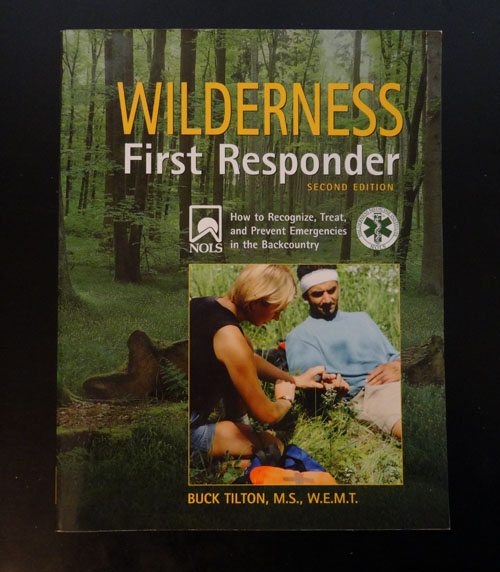
The wilderness first responder is a wilderness focused first aid course. The WFR focuses on extended patient care in remote, wilderness settings. When you’re deep in the backcountry and help is a long ways away, you need to be able to improvise and treat patients with what you have in your pack and in your brain.
WFR is often the recommended first aid course for raft guides, park rangers, ski guides, and other backcountry jobs. The WFR covers trauma and medical scenarios, evacuation guidelines, improvised splints, treatments, transportation, and other pertinent first aid information.
- 80 hours of class
- Curriculum approved by US Coast Guard
- 2 year certification
- Recertification consists of 18 to 24 hours of refresher every 2 years
- Offered by companies like WMI, SOLO, AERIE
- Price: $500 to $1200
- Buy WFR Book
______________________________________
Emergency Medical Technician – Basic (EMT-B)
The EMT-B is a national level of certification. The training is designed for front country care, where you have access to 911, advanced life support, and doctors aren’t too far away. As an EMT you can find work at ski patrols, hospitals, events, fire departments, ambulances, and other locations. You’ll learn everything from how to deliver babies to dealing with traumatic car accidents to transporting cardiovascular patients to human anatomy. The material is covered in-depth.
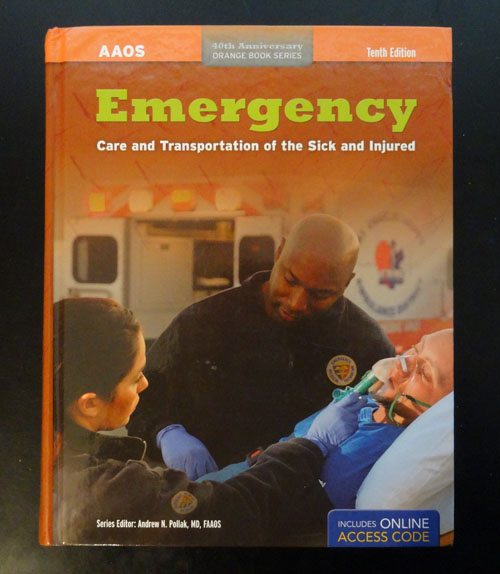
If you are not working full time in health care or you do not have an employer that recertifies your first aid skills, the EMT can be challenging to maintain. You must be competent with medical and trauma emergencies and pass both written and practical exams. EMT-B is the first step on the pathway toward a paramedic career.
- 120 hours of class
- Curriculum approved by National Highway Traffic Safety Administration
- Must pass a state-approved EMT course
- Must pass a national exam via the National Registry Of Emergency Medical Technicians
- 2 year certification
- 48 hours of continuing education every 2 years
- 24 hour refresher course every 2 years
- Price: $500 to $3000
- Buy EMT-B Book
______________________________________
Outdoor Emergency Care Technicians (OEC)
The OEC is a ski and bike patrol focused first aid course. It’s essentially an EMT-B standard of training with a patrol focus. The course and curriculum is managed by the National Ski Patrol. It can be hard to find a course that isn’t associated with the NSP or a Ski/Bike Patrol.
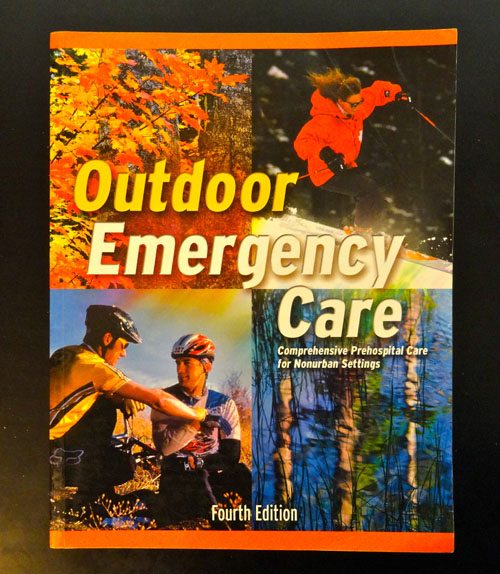
The beauty of the OEC is that it combines front country skills with ski and bike specific first aid in mountain and outdoor environments – rescue toboggans, remote settings, mountain terrain, anatomy, and ski/bike focused injuries.
- 80 to 100 hours of class
- Curriculum approved by National Ski Patrol
- 3 year certification
- Annual refreshers required
- Must be an NSP member or affiliate with a Ski Patrol
- Specifically required for certain ski patrols jobs
- Price: Depends on ski patrol affiliation. May be part of job training.
- Buy OEC Book
______________________________________
Wilderness EMT (WEMT)
Wilderness First Responder + Emergency Medical Technician = WEMT. Is the WEMT the best of both worlds? Front country patient care combined with backcountry improvisation skills? That’s for you to decide. A WEMT is only valid if you are current with both EMT and WFR.
Instead of taking a single, pricey WEMT course, usually you can earn a WFR and an EMT separately. Then contact your WFR provider, show them proof of your EMT, and get the super certification: WEMT. Contact your WFR provider for more details.
______________________________________
Do your own research before you choose the right backcountry first aid certification for you.
WFR, EMT-B, OEC, and WEMT are all excellent choices, but there are other options out there. It’s your responsibility to you to choose the best one for you. You may want to consider:
- Where will you most likely need first aid skills?
- What first aid certifications are required by employers for certain jobs/careers?
- Where will you use your training – SAR? Ski Patrol? Personal trips? Guiding? Home?
- What certification is easiest to maintain? Which one are you most likely to maintain?
- How much time and money can you commit to earning a certification?
- Where can you take a course? From what company/school/provider?
Talk to people who have these backcountry first aid certifications. Evaluate the pros and cons. Whatever happens, please learn first aid. Encourage your backcountry partners to learn first aid. What you know and what you can do can save you or your partner’s life. Any training is better than no training.
Confirm all the details in this post prior to committing to any course.
Do your own research to determine which course is best for you.
At some point, the author has been certified as an OEC, EMT-B, and WFR. He is currently only certified as a WFR.


