
Can Your Backcountry Ski Partner Save Your Life?
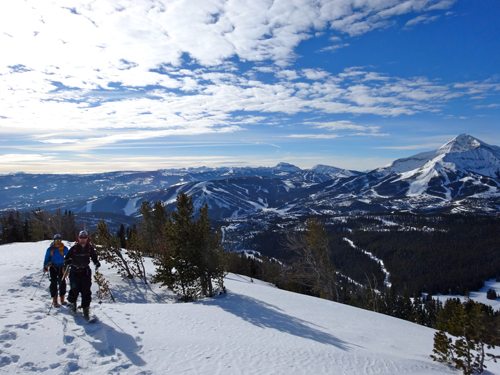
Skiing is often considered to be an individual sport, but backcountry skiing is definitely a team sport. Whether you’re skiing big lines, sneaking into steep couloirs, or cranking out powder laps, your life is always in the hands of your backcountry ski partner.
Choosing the right backcountry ski partner is challenging and it takes time. It’s easy to head out with your best in-bounds buddy, your beer drinking pal, or the local know-it-all, but it’s more important to find someone that is on the same page as you. Your life may depend on their skills.
Here are a few things to consider when choosing the right backcountry ski partner:
Mountain Sense – Wild mountains covered in untouched snow offer up one of the coolest skiing arenas to explore, but you have to respect the mountains at all times. Weather comes in quickly, avalanches happen, terrain traps lurk, crevasses beckon, unseen hazards hide in waiting. It’s important to have a backcountry ski partner who’s mountain sense is always on high alert. They choose safe routes, find safe zones, and assess the lurking hazards of your winter playground. Is your partner aware of the power of the mountains?
Snow Sense – If you don’t dig, you don’t know. A good backcountry partner will want to get hands on with the snow to see what’s going on beneath your skis. Get in the snow and dig a pit. Observe the snow, but also observe your partner. Can your partner properly assess the snowpack and can they support their decision making?
Backcountry Experience – Backcountry experience goes a long ways. The more knowledge and experience you can both bring to the table, the better off you both will be. Look out for the guy that immediately tells you everything they have ever skied and laughs off close encounters with avalanches. Instead, seek out someone who is a bit more humble, keen to share their knowledge, and respects the snowpack. Can your partner navigate through the mountains? Set a skin track? Avoid hazards? Are they luck or are they skilled?
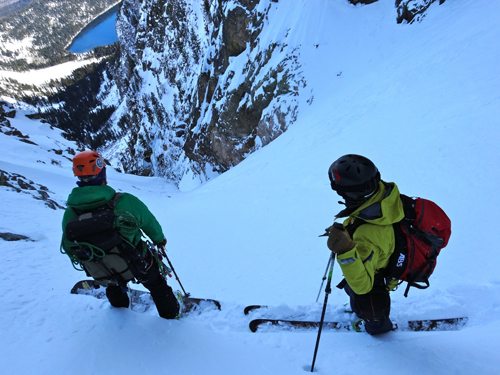
Avalanche Rescue Skills – Avalanches happen. The number one thing you should look for in a backcountry partner is their ability to rescue you in the event of an avalanche. This specific set of skills has the potential to save your life. This means they have avalanche rescue gear and they know how to use it. They need to be quick, efficient, and in shape to perform a succinct and successful avalanche rescue. Practice avalanche rescue skills with your partner until you are 100% sure they can save your life. Can your partner save your life?
Certifications – One way to find out if your partner is committed and dedicated to the backcountry is to see if they have any certifications. Avalanche certifications, first aid certifications, and guiding certifications all show that your backcountry partner is practiced and prepared to handle an emergency. Is your backcountry ski partner qualified?
Risk Tolerance – In the backcountry you have to determine if the risk is worth the reward. Sometimes it is and sometimes it isn’t. You and your partner need to be on the same page at all times. A gung-ho aspiring pro and a father of two will most likely have different risk tolerances. Open discussions and the freedom to voice your thoughts, questions, and concerns are vital in the backcountry. It’s okay to turn around.
Pace – Backcountry ski partners need to move at approximately the same pace in the mountains. It’s never any fun to be the slowest person in the group and it’s equally frustrating to be the fastest person. Adjust your pace accordingly, but always work together and try to find someone that is the same speed as you. It’s often hard to factor this into the equation until you head out on an adventure. How fast is your backcountry partner?
Preparation – Every day in the mountains requires a bit of prep before hand. You need to look at the map, read the avalanche forecast, prep your gear, and communicate with your backcountry buddy. It’s not a one man show out there, you both need to do all of these things to ensure you are both ready for the day. Did your partner read the avalanche report?
Gear – You can tell a ton about a backcountry ski partner based solely on their gear. Is their gear shiny and new? Did they put their skins on before they left home? Do they have beacon, shovel, probe, repair kit, first aid kit, water, snacks, extra layers, skins, harness, rack, rope? Do they perform a beacon check at the trailhead? Are they comfortable clicking into tech bindings or are they lugging around alpine trekkers? Do they have touring gear or snowshoes? Are they starting the day in every layer they own? Did they put a beacon on their dog? The backcountry is a constant classroom, but it’s the little things that differentiate a novice from someone with backcountry experience.
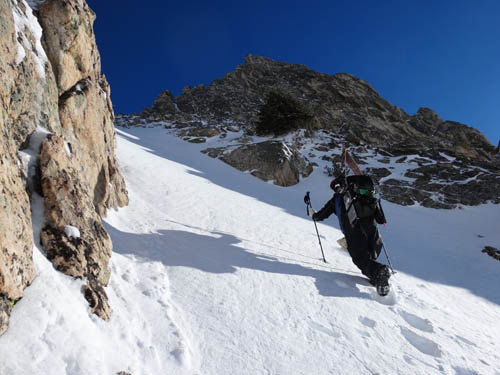
Goals – Always discuss your goals for the day. It’s important to have the same objectives and have your radar out for similar hazards. Open discussion is necessary for any healthy backcountry relationship. Are you both on the same page?
Test The Waters – Never ever head out to ski the gnarliest line of your life with a brand new ski partner. Test the waters slowly and be dubious of your new partner’s abilities until they prove otherwise. Start with a simple tour for some mellow meadow skipping or even some buried beacon drills before you ramp up the relationship into exposed couloirs. You may be amazed at how certain individuals perform or make decisions in the mountains. Be able to make your own decisions and stick with them.
It takes time to trust someone else in the mountains, but it’s time well spent. The right backcountry ski partner will enhance your mountain experience. The wrong one will make you fear for your life. Choose wisely.


