Whether you’re booting up a glacier in the Cascades, joining the herds on Teton Pass, crushing couloirs in the Beartooths, searching for summer snow on volcanoes in Chile, or hiking in bounds at Aspen Highlands, setting an efficient bootpack is a valuable skill to possess.

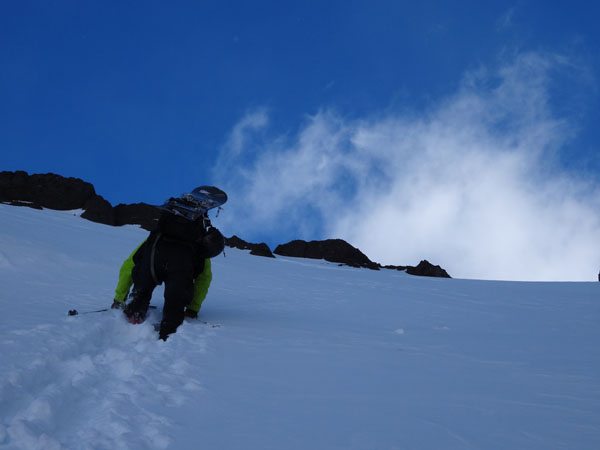
Bootpacks in the backcountry ski world are one lane ascent routes. These trails kicked in the snow can be easy to set in firm snow with crampons or you can wallow through snow like a fat kid in a ball pit. It’s totally dependent on snow conditions and it’s a good time to get your hands in the snow to assess snow stability as you go.
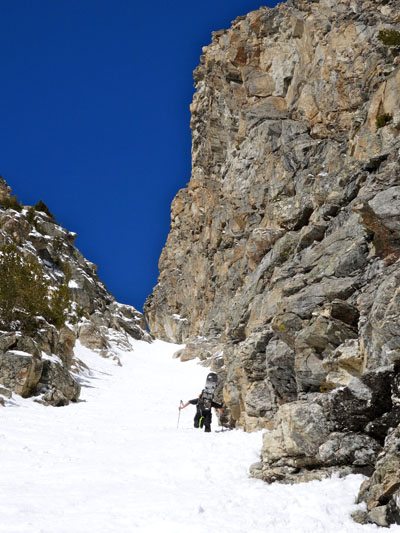
Setting the booter is a lung busting and calf burning experience. From steep faces to confining couloirs, the art of the bootpacking is necessary to master if you want to ski cool lines in the backcountry. It’s trailbreaking at its finest. It can be a mentally and physically draining experience, but it’s always worth the effort. Some bootpacks only go a few steps through a challenging section, while others last for thousands of vertical feet.
The first key to bootpacking is to know when a bootpack is appropriate. It’s almost always easier to skin than to bootpack. Booting becomes mandatory when the slope gets too steep or the snow conditions don’t allow for skinning.
Here are a few tips and tricks to set a bootpack in the backcountry that will set you up for success:
- Choose your gear wisely. – Most bootpacks are in steep terrain. You may need an ice axe, crampons, or a whippet to proceed safely. Know your gear before you go. You don’t need to be fiddling with attaching your skis to your pack or readjusting your crampons on a steep slope. If you’re a splitboarder, you may want to invest in hard boots.
- Everyone hikes at different speeds. – Don’t be embarrassed to give up the right away. Let fast people pass you, then they can set the bootpack. Switch up breaking trail to keep the whole group fresh.
- If you need to stop, step off to the side. – Don’t be a roadblock. Move out of the way. Plus, it’s easier to walk in the back of the group; just be sure to take turns.
- Kick steps directly into the slope. – Stay upright and kick a solid platform. You may need to kick twice to create a good step. This will keep you from wallowing and help your backcountry partner have an easier time.
- Pay attention to where you’re walking. – If you’re setting a booter, you’re probably in the gunbarrel. Be aware of your surroundings.
- Adjust your poles. – Yes adjustable poles are a must for bootpacks. Make them shorter to accommodate the slope angle. It will make it easier to use them as extra points of balance and won’t wear your arms out.
- Give each other space. – It’s backcountry skiing, please don’t bunch up. It’s not safe. Nothing ruins a day faster than getting a crampon to the face. That’s a day ender.
- Build your rhythm. – If you can boot uphill without stopping, you’ll be more efficient and ultimately faster. Find your zone and develop a trance. It’s a mental game.
- Don’t pee in the bootpack. – This seems obvious, so just don’t be that guy.
- Efficiency comes from smaller steps. – Take small, slow steps. Trust us, it’s easier.
- Don’t walk faster than you can breathe. – Walk slow. Allow yourself to catch your breath with each step. If you don’t, you’ll stop regularly and the bootpack will take forever.
- Wear waterproof gloves. – You probably will get your hands in the snow. Don’t wear liners, wear a waterproof glove that will keep your hands warm and dry.
- Disperse your weight. – If you’re punching through the snow, get on all fours like a mountain goat to disperse your weight across the snow.
- Don’t set the bootpack in the skin track. – No one likes a skin track with big, old, post holes in it. If for some reason you’re setting a bootpack where skinning is possible, step off to the side and make your own path.
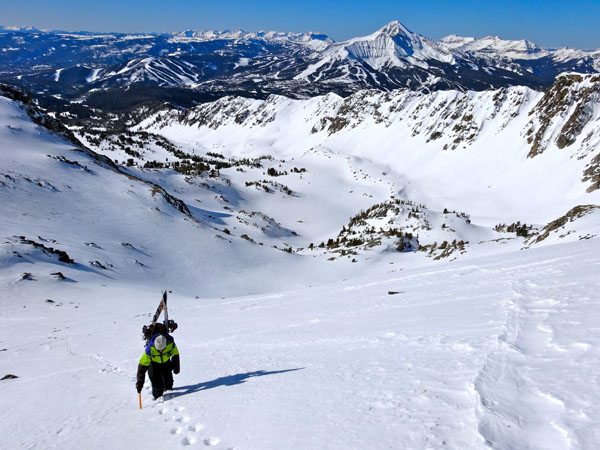
Ultimately, bootpacking can be faster and safer in the right circumstances. Stick to persistent, consistent, slow, and rhythmical steps and you’ll have no problems on any mountain’s stair master.
Enjoy setting your next bootpack. Please be safe in the backcountry.


