
Need To Carry Skis On A Backpack? Try These Ski Carry Methods
When you’re traveling through the mountains sometimes you need to carry skis on a backpack. There are several ways to do this. What’s your preferred method to carry skis on a backpack?

A ski guide I know lives by the 5 W’s – “We Won’t Walk Will We?” It’s a good motto to strive for, but sometimes you have no other option than to strap the skis to your back and jump on the old heel-toe express for a bit.
Let’s take a look at different ways to carry skis on a backpack:
A-Frame Ski Carry
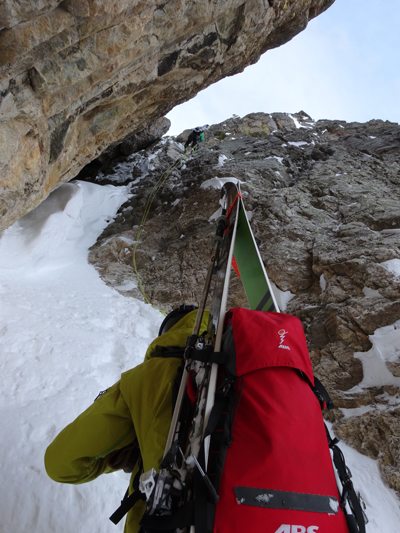
The A-Frame ski carry is the classic way to carry skis on a backpack. In fact, it may be the most popular way to attach skis to a pack. One ski is strapped down by the compression straps on each side of the pack and then a Voile strap is used to connect the tips – making an A-Frame. The A-Frame is great because it creates a tight, bombproof package that allows the weight to be closer to your pack, body, and center of gravity. It also allows the skis to not be right behind your legs while walking and allows for more clearance off the ground in case you are down climbing. Overall it’s a comfortable way to carry skis.
The A-Frame does take a little longer to set up. It requires a ski strap to connect the tips. Without a ski strap the skis will flop around forward and backwards. I find that the A-Frame does not work as well with super fat skis too. I also have run into problems with the sharp ski edges cutting the fabric of my backpack because the edges are cinched down against my pack and potentially my rope too. This configuration can also make it harder to access the side panels and lid of your pack so make sure everything you need is easy access.

Diagonal Ski Carry
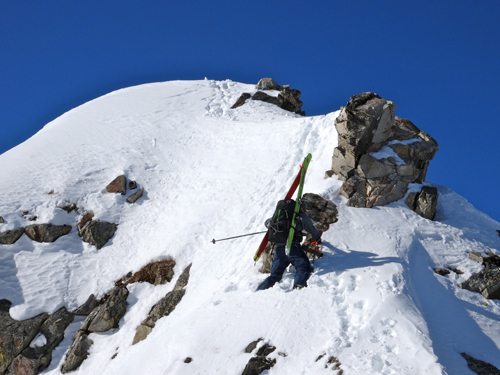
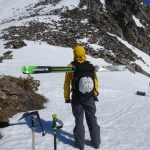
The Diagonal ski carry is a fast and simple way to carry skis on a backpack. It requires a loop near the bottom of the pack and a loop on the upper side of the pack. Strap your skis together with a Voile strap or via ski brakes, then thread it through the two loops and off you go.
It’s one of the faster ways to attach skis to a pack. It’s quick and easy to set up and is often better with a smaller pack and lighter load. The diagonal ski carry allows for easier access to side panels/back panels/top panels. It makes bushwhacking a bit easier than A-Frame as you only have one point to maneuver. The major downfall of the diagonal carry is that it sets the weight farther away from your body and center of mass, which can make you feel off balance. It’s the classic ski-mo racing technique.


Shoulder Strap Ski Carry
The shoulder strap ski carry method is the fastest method of all. Strap your skis together. Loosen your sternum strap and shoulder strap and throw your skis diagonally behind your back. Cinch the shoulder strap down and off you go.
This method is super quick because you can do it without taking your backpack off. It is slightly uncomfortable as a Dynafit toe lock will usually dig into your neck, but it’s super effective for short climbs or walks under about 10 minutes. It’s best in open terrain, but the skis can be angled to be less obtrusive.

Snowboard/Splitboard Carry
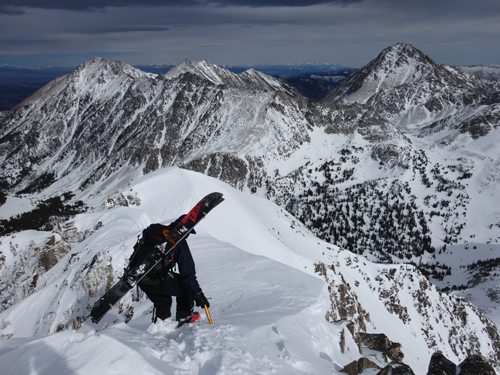
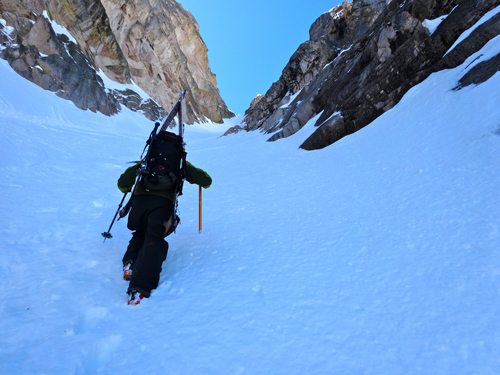
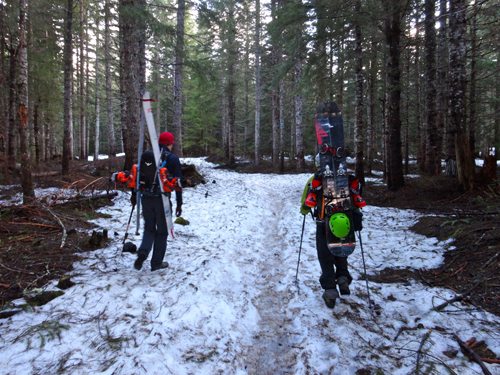
Now I’m not a snowboarder, but I ski with splitboarders quite often. The most effective methods for a splitboarder to carry skis are the A-Frame or Diagonal carries because usually they are already in split mode. Sometimes I’ve seen snowboarders strap a full board vertically to their pack. This may be what a snowboarder with snowshoes would have to do. Not sure why you would ever want to put yourself in that situation though. A full board can often act as a sail if the wind is strong, but it does appear to be effective.
Prussic Drag Ski Carry
The prussic drag is a ski carry method that I have not tried, but have witnessed a few times (sorry no photos). When wearing a harness, you can attach your prussic cord to your back gear loop then run it down and attach it to your skis – thus dragging your skis behind you. I’m not sure this is a great method, but it could save a bit of weight maybe. You also better be sure you tie your knots really well so your gear doesn’t tumble down the hill without you.
Horizontal Ski Carry
Very rarely do I ever see anyone use the horizontal ski carry method. There’s no real point to it except that it’s fast. The horizontal ski carry method is done by strapping your skis together then using your backpack’s “brain” to hold the skis in place. It’s kind of like having a super long and useless ape index. It’s worthless except for in extremely open terrain. Be careful not to knock your backcountry ski partner‘s heads off.

Snowplow Ski Carry
The good old snowplow method is more entertaining than useful. It’s an ok way to navigate through thick forests when the Diagonol or A-frame methods are constantly getting snagged on branches, bushes, and what not. It’s done by connecting the tails to the pack and then pointing the tips of the skis in front of you – kind of like a horizontal A-Frame. I wouldn’t recommend this method. Instead just carry your skis in your hands. It’s better for you.
I prefer the top three methods personally, but there are other ways to carry your skis on a backpack too. Let me know what works for you in the comments below.
Everyone has a preference on how they carry skis on a backpack. It is often dependent on the backpack attachment system. It’s up to you to determine the best method for your comfort, time, objective, and pack. You also need to factor in weight distribution and clearance. Ski carry attachment points is something to consider when buying your next ski touring or ski mountaineering backpack.

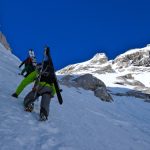
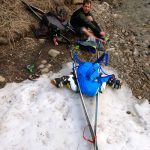
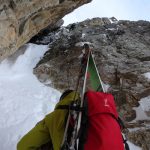
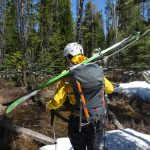
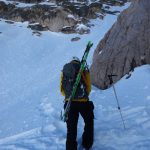
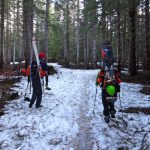
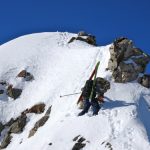
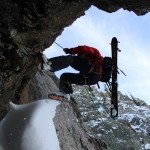
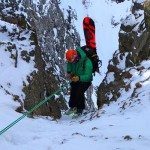
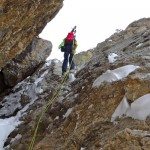
Here is a collection of ski carry photos:





And one more we found on instagram:


