
What is ski mountaineering? When I Googled “Ski Mountaineering” over 1.5 million search results came back. None of the top results could accurately define the term, yet ski mountaineering is a growing sport and activity in winter environments around the globe.
Just look at Instagram and we can all agree that it seems like more and more people are getting after it on skis in the mountains. Maybe ski mountaineering is like porn? We know it when we see it.
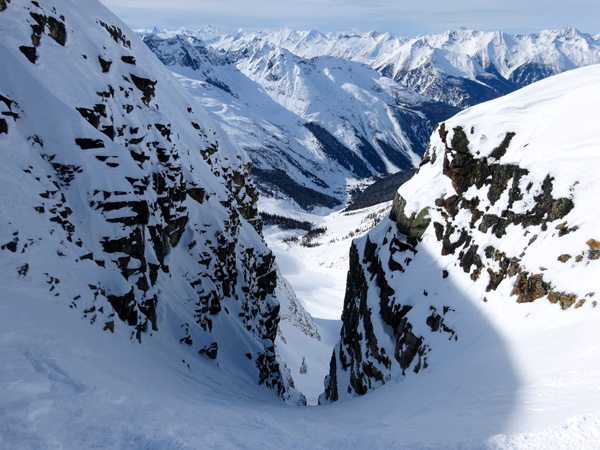
Well, here’s our try at defining the term ski mountaineering. The words can be defined as:
- Ski – verb – travel over snow on skis
- Mountaineering – verb – the sport or activity of climbing mountains
- Ski Mountaineering – verb – to climb mountains and ski down them
It seems simple right? That’s because it is. The most basic definition of ski mountaineering is ascending and descending mountains on skis. This sounds very similar to backcountry skiing and ski touring, but ski mountaineering is more than that. They do all fall under the same umbrella and the terms can be used interchangeable, but in our opinion ski mountaineering takes backcountry skiing to a new level.
Backcountry skiing and ski touring are about the journey through the mountains. It’s about the walk, the experience, and hopefully the powder. It often involves heading into easy access terrain to yo-yo laps or chase aspects to find the best snow. It requires basic mountain sense, avalanche skills, the proper ski gear for uphill and downhill travel, and good backcountry ski partners.

Ski mountaineering takes everything that is backcountry skiing and adds on the element of human powered objective based skiing. When one goes ski mountaineering they have their eyes on the prize. This may mean skiing a puckering steep face, descending a classic couloir, summiting a remote peak, navigating exposed alpine terrain, traversing a glaciated mountain range, or bushwhacking uphill for hours to reach the snow line.
In ski mountaineering, you often take all of your backcountry gear add in your rock gear and rope skills and you’re ready for the objective of the day. Ski mountaineering objectives are not things that can be tackled every day though. In fact, sometimes ski mountaineers will wait years for a line to fill in for conditions to be safe enough to ski. This sport requires patience, skill, and finesse.

Ski mountaineering usually dictates a higher level of risk than traditional backcountry skiing due to snow conditions, partners, exposure, terrain, or other factors. In order to manage that risk, ski mountaineers need to master all sorts of skills – ski touring, track setting, rappelling, crevasse rescue, boot packing, glacial travel, ice climbing, placing protection, anchor building, self rescue, and other important mountain skills.
To do these things safely and efficiently, you need the right gear (axes, crampons, ropes, harnesses, cords, pro, etc) and the right instruction and experience. Beyond this, ski mountaineers must be physical fit to carry the necessary gear and still reach their objective. Once they are there, they still have to ski down regardless of the snow conditions.
Luckily, skiing is always more fun than walking, right? Yet ski mountaineering requires skiing at an expert level in variable terrain and snow conditions on tired legs with a heavy pack on the back. That’s no easy task. Ski mountaineers need to be able to adapt skiing styles and techniques to achieve success in these conditions.

You can’t just get off the couch and become a ski mountaineer. It takes time, experience, and skill building. You’ll need to:
- Gain backcountry experience
- Get the gear and learn how to use it properly
- Build your endurance and strength
- Hone your avalanche skills
- Develop your mountain sense
- Study wilderness first aid and self rescue
- Spend time in alpine terrain
- Learn how to move in the mountains
- Know when to turn around
- Fine tune your skiing techniques
- Find backcountry partners that you trust with your life
- Perfect your technical skills
- Always be safe
There’s something alluring about skiing big mountains and cool lines on wild snow deep in the backcountry. There are risks involved, decisions to be made, experiences to be had, and snow to be skied. Start small and build your skills and experience in the mountains. Before you know it, ski mountaineering will become a life long pursuit.

Ski mountaineering is the real deal. Do it right and it’s one of the most exciting ways to experience the mountains. Do it wrong and you can be seriously injured or even die. Be smart and be safe in the mountains. Know your limits and realize that the mountains are always more powerful than you. Treat them with the respect that they command and deserve.
So what is ski mountaineering to you? What would you add or subtract from our definition? Tell us in the comments below.
Learn more about ski mountaineering in:


